
You used to be able to hire a CMO by type: high art or high science, or somewhere in between. Perhaps you needed a generalist and a strong operator who managed everything (including the politics). Or you could have been in the market for a high-vision brand builder. Maybe you needed a demand gen CMO who lived in the pipeline and died by the numbers.
But today, it’s not as easy to figure out what kind of CMO you need. In part, because all the types are merging together. The market is moving incredibly quickly, buyers are researching differently, and AI has changed where people find information and how your marketing team runs.
When companies come to us looking for a CMO, we used to talk about what type they needed. Now we're more interested in why they're hiring one in the first place. What needs to change about how the company goes to market, and who can actually lead that change?
Working with startups at all stages of growth, we've had a front-row seat to how the CMO role is changing, and we have some thoughts (don’t we always!). Buckle up, there's a lot to unpack, and it goes well beyond the marketing org chart.
Brand 🤝 Understand 🤝 Demand
You can't really hire a pure-play demand gen leader anymore, because demand gen depends on brand, whether your CFO agrees or not. Without a salient, definitive brand, demand gen is expensive and usually doesn't work, especially for complex B2B sales cycles. You can spend all the money you want getting in front of buyers, but if they don't know who you are, understand how you solve their pain, or have a reason to trust you, you're making every conversion harder. Brand does a lot of the heavy lifting before someone ever clicks an ad or initiates a sales call.
That's why the CMO needs to understand both the art and the science. You need someone who knows how to build a brand people recognize and trust, but also how that brand translates into pipeline and revenue. Some generalists lean visionary and creative, while others lean analytical. In the wildly complex world of B2B marketing, that may not even be one person (don’t worry, more on this below).
Either way, they need strong specialists working with them and a good grasp of the market, politics, and the business. Someone has to make sure the website, the sales deck, the newsletter, the LinkedIn post, the YouTube video, the press release, and the product page are all telling the same story using the same words that reach your top-level audiences: humans and robots (LLMs)
Buyers check one source against another
Gartner recently surveyed 645 B2B buyers about how they buy. The answers look contradictory at first. 70% prefer a completely digital, self-service buying experience, and 67% prefer to buy without a sales rep. Yet 69% prefer to validate AI-generated insights with a sales rep.
Buyers also used an average of seven information sources during a recent purchase, and 45% used GenAI, mostly to research vendors and products.
So what does it all mean? Buyers are increasingly comfortable doing their own research, AI included, but when it comes time to make a decision, they still want to fact-check what they've learned with an actual real-life person.
If your press coverage, website, and content say one thing and your sales team says another, you've added friction to an already hard process. You chip away at the trust and understanding you’ve created for your company and product. You either lose the buyer's attention or set the wrong expectations, and then your sales engineers have to clean it up (if they even get the chance).
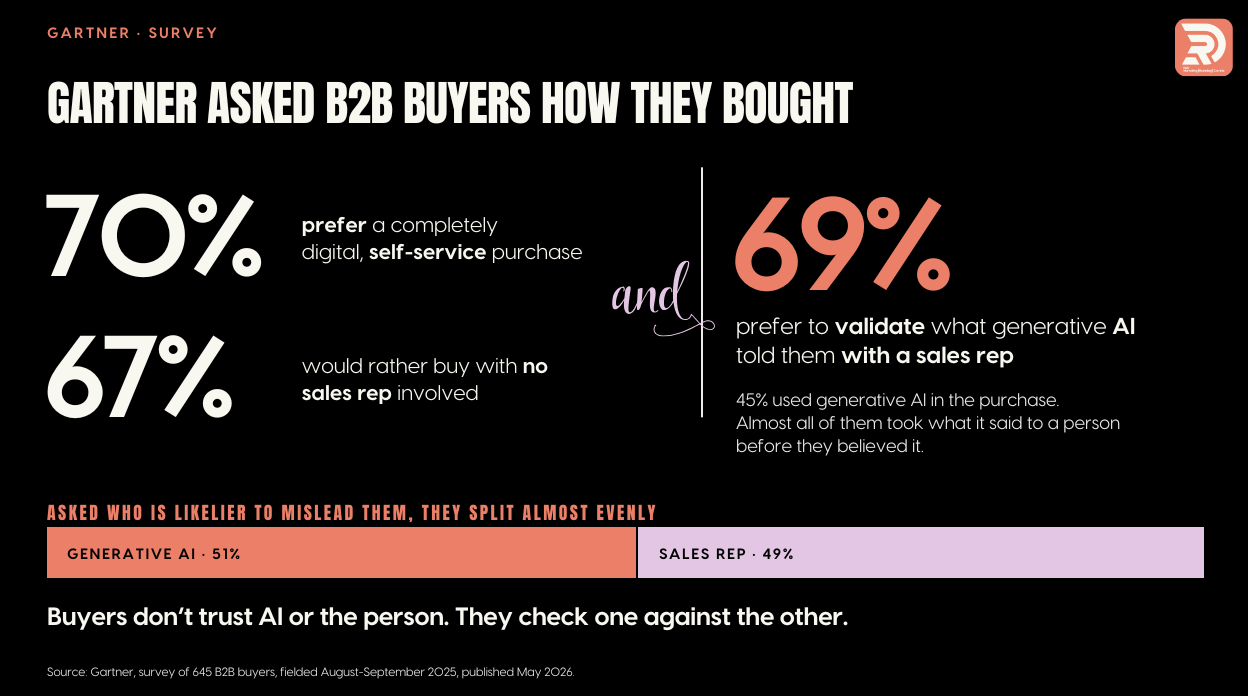
Buyers are increasingly comfortable doing their own research, AI included, but when it comes time to make a decision, they still want to fact-check what they've learned with an actual real-life person.
What shape is the funnel, anyways?
Traditionally, comms and PR were focused on getting the word out. You'd announce something, hopefully get some good coverage, and leave it to marketing and sales to take things from there.
But that model has been flipped on its head. Buyers now ask search and AI tools long, specific questions late in their decision.
High intent moves further down the tail
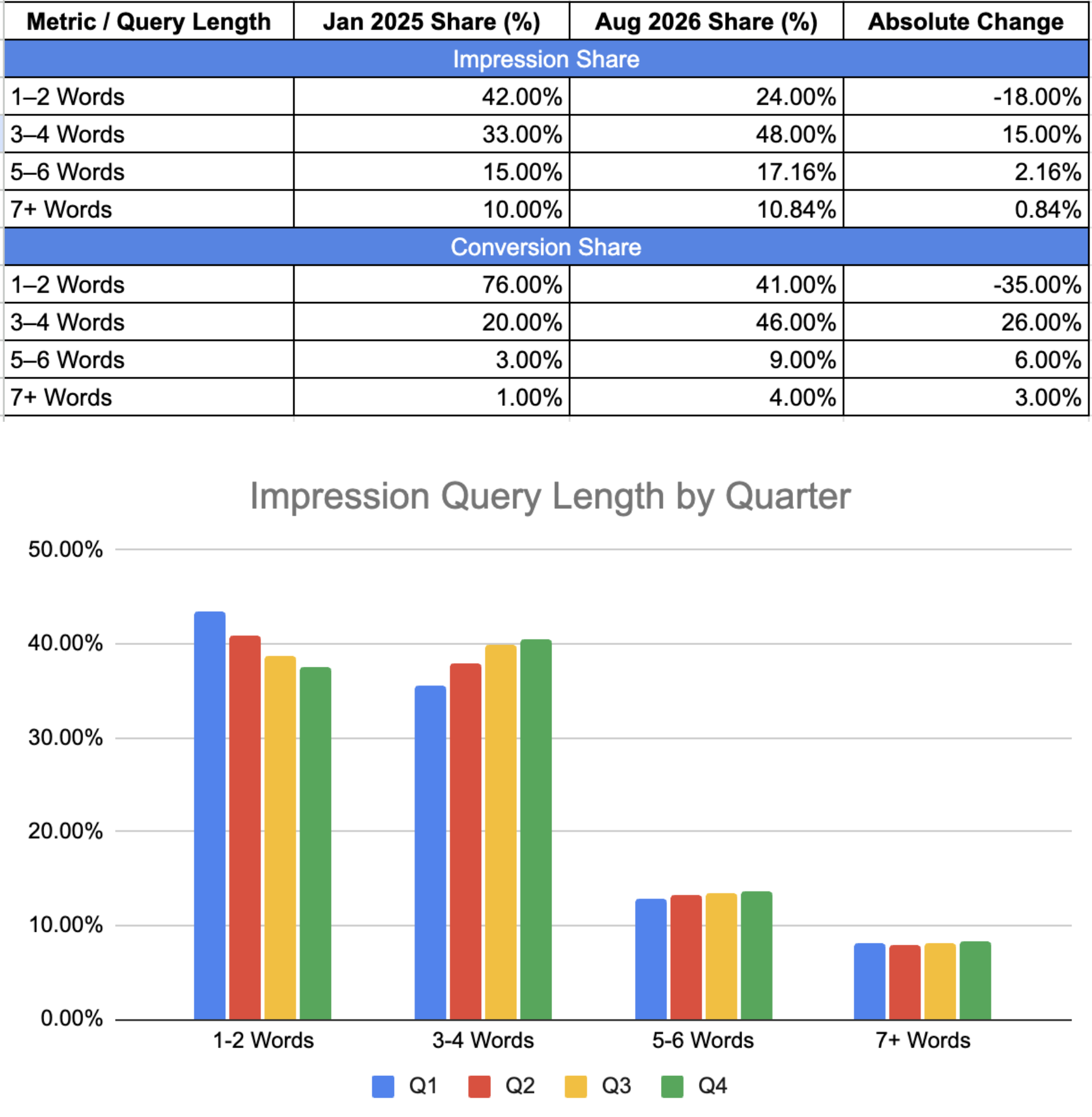
But that model has been flipped on its head. Buyers now ask search and AI tools long, specific questions late in their decision-making.
Those tools pull from your press releases, coverage, and bylines. That means your top-of-funnel messages are now showing up in bottom-of-funnel research.
What used to be an easy-to-draw, easy-to-visualize funnel is now more of a…we’re not sure yet! An ouroboros? A Möbius strip? Pick a shape you like?
Comms and PR feed search, the website feeds search (for AI overviews/zero-click reality), search feeds the buyer's research, and that research shapes the sales conversation. Confused? Everyone is.
Think about how many press releases are written to satisfy legal rather than tell customers something useful. Or how much effort goes into landing a big national story that does little to explain what the company actually does. Those things were never particularly helpful, but now they're also shaping what buyers find when they're researching you, sometimes years after the original announcement.
Comms needs to be close to marketing
We're watching more companies move the chief communications officer under legal (hello, Microsoft!). We’re not going to mince words here, we think that's a mistake.
We love our friends in legal, but if legal shapes how your company talks, your messages will end up…written for lawyers and not people. Legal is our first call in a crisis, but not for day-to-day communications. Spend 5 minutes talking to your top sales guy, and we’d make a confident bet that he sounds almost nothing like your lawyer. If messaging coming out of comms uses different language than marketing, you're probably confusing the market (not to mention the search bots) about your value props. Few companies can afford that confusion right now.
We’d propose a different shift in the comms and marketing org structure, where comms and marketing work as a package deal. That doesn't mean comms has to report to the CMO (we’d argue they belong under the CEO, and we’re not alone here).
While comms can benefit from some distance to read the market objectively and to work directly with policy and legal, comms and marketing should be in constant contact.
Segmentation still matters, just differently
Neat audience boundaries are almost completely gone. So what do you do instead? We like to lean on ~ 5 key value prop planks per quarter or longer (and then re-check them against market realities and lingo every quarter). The segmenting is more about parsing those value props and proof points and listening to the market. Your segmentation might even be by content type, as different segments of people choose different ways to interact with your message. The key is that you’re delivering the same messages; you’re simply providing them in the way that person prefers to receive them, not by “stage.” Maybe a logo you’re trying to land is in “deep funnel,” and it’s getting very technical. How does that buying group receive and absorb information? Those are content channels, not just types of content.
Marketing teams now have more data than ever on what their buyers actually read, watch, listen to, and follow. Our favorite is SparkToro, which lets you rank publications by your ideal customer profile and persona instead of by reputation (branding works on marketers and CEO’s too!). Your most important publication might not be what you (or your CEO) think it is. It’s time to take a closer look at trades, niche newsletters, podcasts and, well, the data. The “attribution” (don’t get us started, the TLDR is we’d argue it’s not possible anymore) is “all of the above,” based on knowing where your ICPs and personas spend their time and what they care about.
This can be a hard pill to swallow, especially for non SaaS leadership that loves a hard metric like attribution ROI. Almost every single CEO we work with has their eye on a major tier 1 national outlet as the top prize. And don’t get us wrong, being in the New York Times is still a big win to build reputation. Top-tier media can add significant credibility and weight to your brand, but they work best alongside the outlets your buyers rely on.
Howdy, pardner! 🤠
We already talked about how the CMO and Head of Comms need to work together. But unfortunately (sorry introverts!), you’re not done making new friends. A CMO who only thinks about marketing will struggle to do the job today. So much of what determines whether a company grows happens outside the marketing department, from what the sales team hears to how HR hires and what leadership promises investors.
The best CMOs know how to get themselves into those conversations, ask good questions, and build relationships across the business. They don't need to be experts in every function, but they do need to understand enough to challenge assumptions, spot opportunities, and make sure the company's go-to-market strategy reflects the entire spectrum of influence.
Where to start this quarter
Think about your org design as you grow. Do you need a CMO? Or do you need deep strategy work semi-annually from a fractional CMO or external team, plus an internal team that can guide, lead, and execute complex campaigns and events?
Compare your last five press releases with your sales deck. Do they use the same words and convey the same values? Do they address the same challenges and solutions?
Build one shared message framework for marketing, comms, and sales, and use it everywhere.
Rank media by what your buyers engage with, then fill gaps with the national hits that add weight.
Put your CMO, Product, Ops, Policy, and Comms leaders in a standing ‘sync’ meeting, whatever the reporting lines.
Talk to your sales engineers. What questions are buyers coming in with, and what misconceptions are they correcting? What gaps has your SEO/AEO/GEO work identified? Find them and close them.
